Choreographies of Resistance, solo show, Portals_Studio, Iasi, 2026
Choreographies of Resistance brings together a series of micro-actions in which persistence emerges as return, adjustment, and close observation of one’s own working conditions. Not as a solution, but as a way of remaining, of continuing, and, at times, of juggling these conditions without ever fully resolving them./
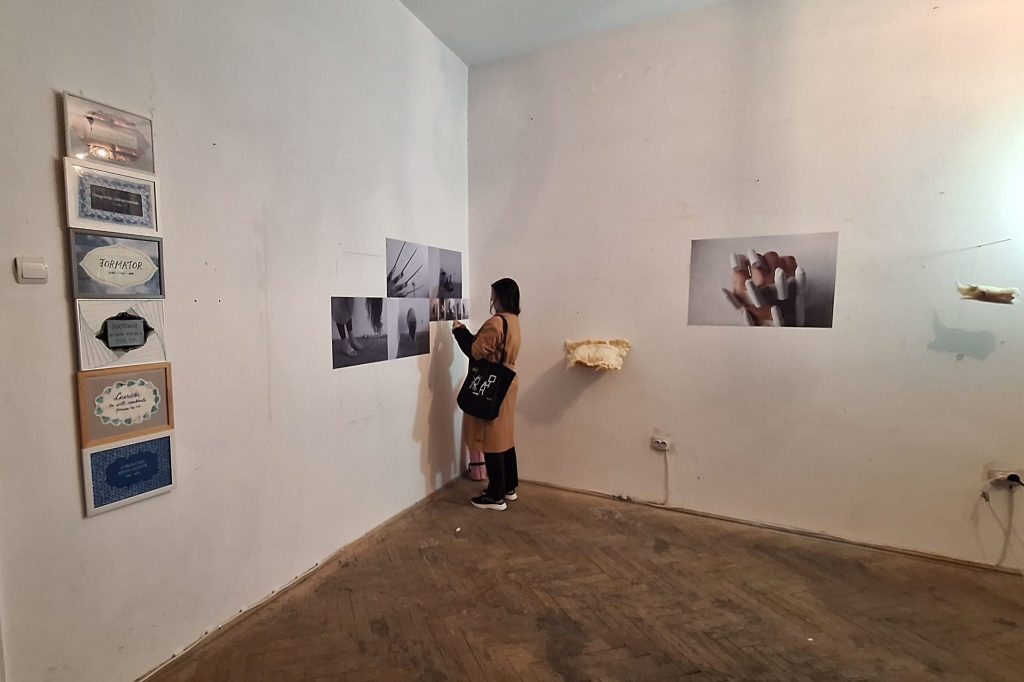
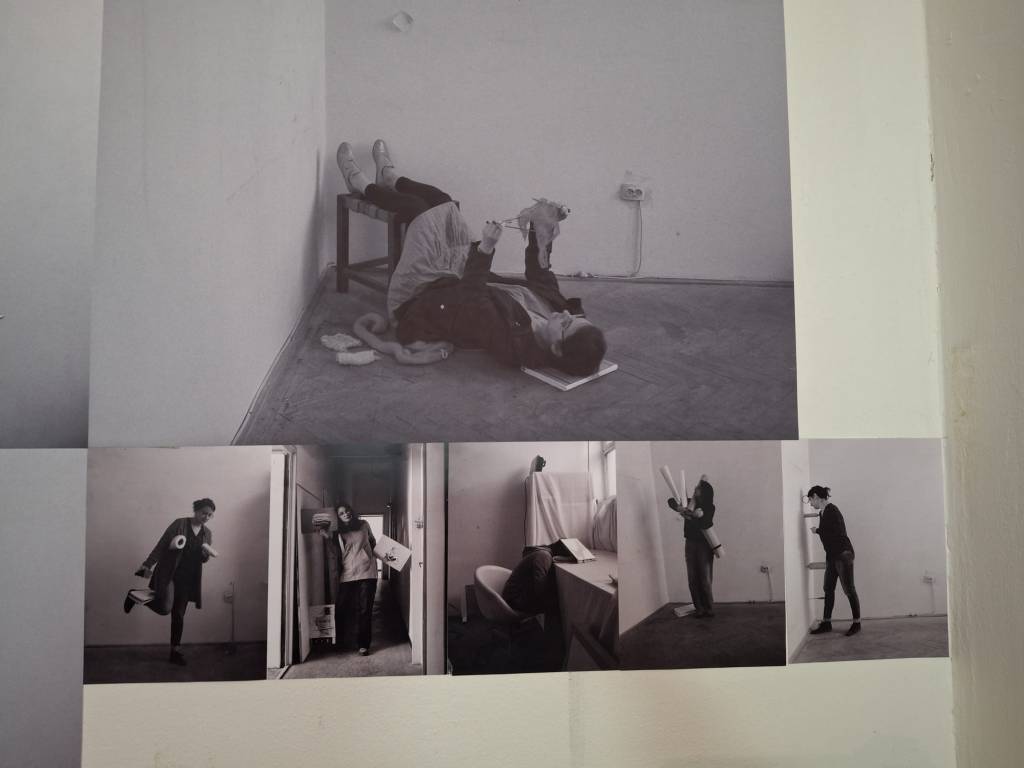
Choreographies of Resistance brings together a series of works that investigate gesture as a form of resistance. Situated between instruction and repetition, between minimal effort and suspension, each work activates a choreography in which the body, time, and the relationships between things are held in tension.
Several works directly revisit actions associated with the practice of Erwin Wurm, using objects drawn from the artist’s everyday working environment. Unlike the absurd interactions characteristic of Wurm’s work, the objects here—chalk, knitting needles, textiles, and documents—are actual working tools, carrying traces of use, wear, and memory. The hand-mounted devices, echoing gestures explored by Rebecca Horn, extend the body through tools that simultaneously enable and obstruct action. Rather than amplifying performativity, they destabilize it.
The Fabric of Time, solo show with Andreea Pricop, Arteast Gallery, Iasi, 2026
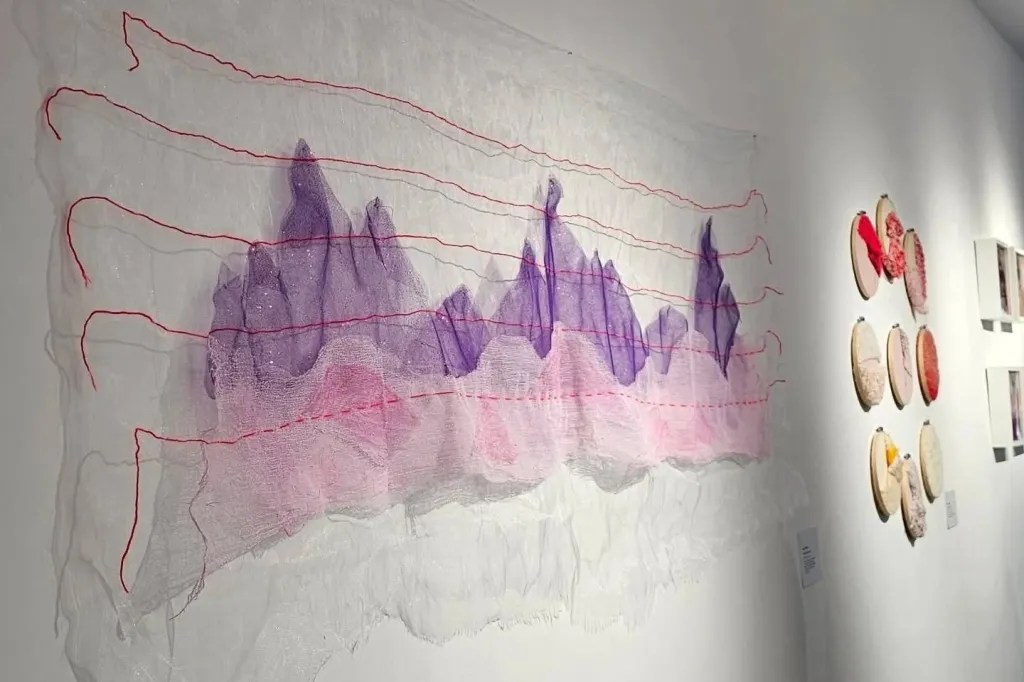
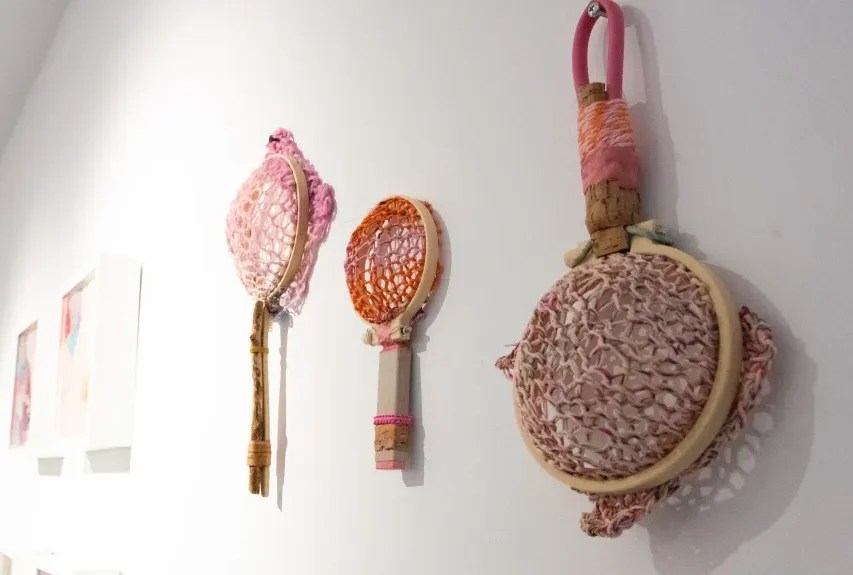
The works presented in the exhibition The Fabric of Time explore how the intensity of contemporary life is perceived and negotiated within everyday experience. Textile objects made from domestic materials function as sensitive devices for measuring, filtering, and regulating lived intensity. Some works translate experience into durations—gentle or acute—suggesting how temporal perception expands or contracts under pressure. Others operate as filtering structures that register internal accumulations, where experiences slowly settle, while others explore fragile forms of balance.
The strainers—transformed domestic objects—function as fragile instruments for filtering affective time and as metaphors of permeability. Through their mesh, not only matter passes, but also gestures, words, and lived experiences, which are retained or lost, transforming into memory within an ongoing process of affective recycling.
The textile landscape of (over)activation adopts the form of a performance graph and applies it to the body as a sensitive terrain, where intensities accumulate in layers and elevations. Here, peaks do not signify success, but intensity. Elevations mark states of activation—stress, tension, inadequacy—while plains become fragile spaces of regulation and respite, shaping a relief of internal consumption.

